Best Things to Do in Recife & Olinda, Brazil + Day Trips
Disclosure: Tess the Traveler contains affiliate links and is a member of the Amazon Associates Program, meaning that if you make a purchase using one of these links, I may earn a commission. I only recommend products and companies I trust. See the Privacy Policy for more information. Thanks for your support!
Ever booked the wrong flight, stayed in a mosquito-infested apartment with no water, and still ended up loving the destination? That’s Recife for me.
The best things to do in Recife include wandering Dutch-influenced Old Recife, visiting museums on frevo and forró, and eating your way through Northeastern Brazilian food, plus easy trips to nearby Olinda and the reef-protected beaches of Porto de Galinhas.
I spent about a week here with my now-husband (who’s Brazilian), and for some reason, so many foreign tourists seem to overlook Recife, which I think is a huge oversight. I’ve been to Brazil multiple times and visited a number of different cities, and Recife still stands out, with its vibrant culture, traditional music like frevo, delicious food, and gorgeous beaches.
Plan on three to five days, and aim for November through February for the sunniest weather. Here’s everything worth doing, and why Recife deserves a spot on your Brazil itinerary.


Visit Boa Viagem
Sometimes compared to Miami or Venice Beach, this is a commercial area of Recife where you’ll find a lot of high rises and shopping.
But mainly, it’s where you’ll find Recife’s most popular beach, Boa Viagem Beach.
Definitely come hang out here for a while, and don’t skip grabbing a snack from one of the beach vendors — they’re one of the best parts about Brazilian beaches, in my opinion!
But definitely stick to the sand while you’re here.
You’ll see a lot of signs warning you about sharks — I had literally never seen a sign like that before, but as it turns out, this area has dealt with a lot of shark attacks.
So with that said, this is not a beach for swimming. It’s really just about relaxing and enjoying the view here. (Don’t worry, we’ll get to a couple shark-free spots later in this guide!)


Explore Recife Antigo (Old Recife)
This is seriously the gem of Recife.
It reminded me a tiny bit of Salvador, Brazil, which is also in the Northeast, due to its colorful buildings and cobblestones. But it has its own distinct flavor — namely, its Dutch influence, which is unlike anywhere else I’ve seen in Brazil.
Recife actually has such a fascinating history. The Portuguese first founded it in the 1530s, but then a century later, the Dutch took over for around 20 years. During this time, the city grew a fairly sizable Jewish population, although many of them ended up leaving when the Portuguese regained control of the area, due to the Inquisition.
Throughout the colonial era, it served as a major port for enslaved people, and also for sending sugar that was produced in the area to Portugal.
But ok, enough of the history lesson.
Here are the must-see spots in Recife Antigo:


Marco Zero
While here, you’ll want to start off in Praça Barão do Rio Branco, commonly referred to as Marco Zero, or Ground Zero. This is considered the birthplace of Recife, and is the main square in the neighborhood. Apparently back in colonization times, this area was used to measure distances to the rest of the state of Pernambuco, hence the giant compass design you’ll see on the ground here.
If you come during a Sunday night, apparently this area becomes super lively with music and food vendors.
I stopped by during a late afternoon on a weekday, and the whole neighborhood felt pretty quiet, which honestly made it nice to walk around.
Parque das Esculturas (Francisco Brennand Sculpture Park)
From Marco Zero, you can see ceramic sculptures across the river, and you can visit them up close after a boat ride of about five minutes. The open-air museum has been around since 2000, and features around 100 sculptures created by Francisco Brennand.
Boatmen at Marco Zero offer rides for around R$10 round trip. I wasn’t able to make it there unfortunately, but I’ve heard that it’s extra special at sunset.
Centro de Artesanato de Pernambuco Unidade Recife
If you only do one thing, honestly, I would do this! One reason I always make it a priority to visit galleries, markets, and other shops when I travel is because you can learn so much about a culture through its art, and this crafts center seriously takes this to the next level, with a ton of fascinating, locally-made creations.
Bom Jesus Street
This is the main street in Recife Antigo to check out. It has some interesting history to it — since the 1600s, it’s had a bunch of different names, including “Rua do Bode” (Goat Street), “Rua dos Judeus” (Street of the Jews — as a Jewish person, I’m not feeling crazy about that name), among others, before ultimately becoming Good Jesus Street.
There are a number of restaurants and cafes around here, and notably, the first synagogue in the Americas, Kahal Zur Israel is right here. (It was closed when I visited so I just looked from the outside).
It was built all the way back in 1636 during Dutch rule, a time period when there was more freedom of religion. The museum was revamped in 2001, and today, it serves as a museum along with an operating synagogue.
It’s closed on Mondays, and the entrance fee is R$40.


Embaixada dos Bonecos Gigantes
If the giant Carnival puppets in Olinda intrigued you (or creeped you out, like me), this small “museum” on Bom Jesus Street shows more of them. It costs R$35, which is a bit high for the size of the museum, but is worth considering depending on your interest level.
Paço do Frevo
As the name suggests, this is a museum about frevo, which is a distinct music style that comes from Recife is also in this neighborhood. Sadly since I went to Recife before doing literally any research (forgive me, it was before I entered my blogging era!), so I just didn’t know to come here.
Now, after my numerous visits to Brazil, I can confidently say that music is such a major part of Brazilian culture and identity. So I think if you have the time, Paço do Frevo is definitely worth a stop. I’ll definitely be heading here once I can make it back to Recife.
There are a number of exhibits here as well as frequent performances. It’s closed on Mondays, and admission is R$10.
Cais do Sertão Museum
This museum is also music-related, but it’s about the genre forró, as well as Northeastern culture. It particularly focuses on Luiz Gonzaga, who’s credited with amplifying this musical style and local culture.
What makes this museum extra intriguing are its interactive exhibits, including an instrument room and a karaoke room. As much as I love museums, they can get tedious sometimes, so I love museums that use different elements like this to engage you! I’ve heard a ton of great things about this museum, so I’ll definitely be adding this one to my future itinerary as well.
It’s also closed on Mondays and is R$10.
Other Cultural Sites in Recife
Ricardo Brennand Institute
Now, shifting out of Old Recife and into the Várzea neighborhood, is the Ricardo Brennand Institute.
Sadly I missed this one too, but this museum and cultural center is considered one of the top things to do in Recife, so I had to include it for you! Seriously — while researching for this guide — I can’t tell you how many Reddit comments I’ve stumbled upon saying to come here. That’s what I get for not researching before I visited!
The fact that it’s in a castle (albeit a fake castle) immediately got my attention, but beyond the cool location, it also just seems like a really interesting cultural center.
Here, you can find all sorts of Brazilian and European art, and fitting with the medieval theme, artifacts like swords and armor. Apparently, it’s the world’s largest collection of weapons, with over 3,000 pieces. I can’t say the weapons emphasis really speaks to me, but I am intrigued by its apparently very robust collection of documents and art from the colonial era and the time of Dutch rule.
Hours are 1 to 5 p.m., Tuesdays through Sundays, and admission costs R$50.
Museu da Cidade do Recife
Although I clearly messed up during my time here by missing literally every museum, I don’t want you to do the same! Housed in a Dutch fort first built in 1630, Museu da Cidade do Recife is considered one of the city’s best museums, and another one that’s popped up a million-and-one times while researching for this guide.
It’s dedicated entirely to preserving the cultural heritage and history of Recife, and their extensive collection looks particularly fascinating, including a ton of photographs, archaeological items, tiles, maps, books, and more.
The museum is closed on Mondays and Tuesdays.
Rua da Aurora and Museu de Arte Moderna
Rua da Aurora, or Aurora Street, is located in the Boa Vista neighborhood, and is known as one of the city’s prettiest streets. The historic street faces the river (Recife is actually made up of a network of waterways, drawing some comparisons to Venice), and is lined with colonial-era mansions.
While here, you can stop at the Museum of Modern Art, which is located in a historic mansion. It was the first gallery in the state of Pernambuco, and it focuses mainly on artists from the Northeast of Brazil.
The museum is closed on Mondays.
Mercado de São José
Opened in 1875, this was one of the first prefabricated iron buildings in Brazil, constructed in the typical style of 19th-century European markets. Inside are dozens of stalls of traditional handicrafts plus vendors selling herbs, honey, food items, and fish.
It’s open til 6 pm Mondays through Saturdays, and til noon on Sundays.
Capela Dourada (Golden Chapel)
Construction began in 1696, and it’s described as the first temple in Brazil covered entirely in baroque decoration. Highlights include its 17th-century artwork and ornate gold-covered walls.
To go inside, it’s R$15.


Olinda
Olinda is a super cute neighboring town that’s just about 30 minutes away from Recife, and trust me when I say that it’s worth a stop! This town is especially famous for being an UNESCO World Heritage Site, and also for Carnival.
As you may know, Rio de Janeiro and Salvador are known for having the best Carnival events, but Olinda, despite being a much smaller town, is arguably No. 3.
Olinda has made its mark for having its own spin on the iconic event, by using giant paper mache puppets, frevo music, and unique elements such as a tribute to the enslaved people who didn’t survive. While I didn’t visit during Carnival, I did see some of these puppets, known as “bonecos gigantes” randomly throughout the town, and honestly, they’re a bit creepy to me 😂
All in all, Olinda is pretty small, and is the perfect day trip from Recife. Like Recife, it’s got a beautiful Old Town to walk through, filled with colorful buildings and cobblestone sidewalks. Wandering around is pretty much the main attraction — despite being a World Heritage Site, it feels really un-touristy and low-key.
Rua do Amparo
Rua do Amparo is the main street in Olinda’s historic core, dotted with street art-covered buildings, restaurants, and galleries.
Alto da Sé
And whatever you do, you have to stop at Alto da Sé. You get such a beautiful view from here, and you’ll also find a number of street food vendors and craft markets.
I had some amazing acarajé here that I’m still dreaming about. If you’re unfamiliar, it’s a fried black-eyed pea fritter stuffed with a spicy shrimp mixture that comes from the Northeast of Brazil.


Se Cathdral
Right around here, you’ll also see Se Cathedral, which is a popular destination in Olinda. I’m not big on churches, but it does have beautiful architecture and overlooks the water, which I can’t complain about.
If you’re in the mood for more churches, Olinda is also home to Convento de São Francisco, the oldest Franciscan convent in Brazil, that’s also known for its Portuguese tiles, and the incredible gold-filled Igreja e Mosteiro São Bento.
Olinda is also well known for its nightlife, but we honestly didn’t check that out at all so I can’t attest to it.
How to get to Olinda
Olinda is about 30 minutes from central Recife and Boa Viagem, so it works as an easy half-day or full-day trip.
- Uber or 99: The simplest option. I’d expect to pay between R$25 and R$40ish.
- Local bus: Although Ubering will probably be the most comfortable as a tourist, there are a number of bus options that go between Recife and Olinda. Find up-to-date schedules on Moovit or Citamobi. You can either purchase a VEM card for multiple rides, or bring cash.
- Guided tour: This full-day Olinda and Recife tour includes hotel pickup from Boa Viagem, and has high ratings.

Porto de Galinhas
This little beach town wasn’t even on my radar til the apartment my husband and I were staying in in Recife decided to shut off its water. The apartment was filled with mosquitos, had no Wifi, and had a mattress that was hard as a rock, so when the water stopped working, my husband and I pretty much hightailed out of there.
We quickly booked the one hostel that was available at the last minute, and drove an hour away to Porto de Galinhas, where we decided to spend the next three days til it was time to fly back to Rio.
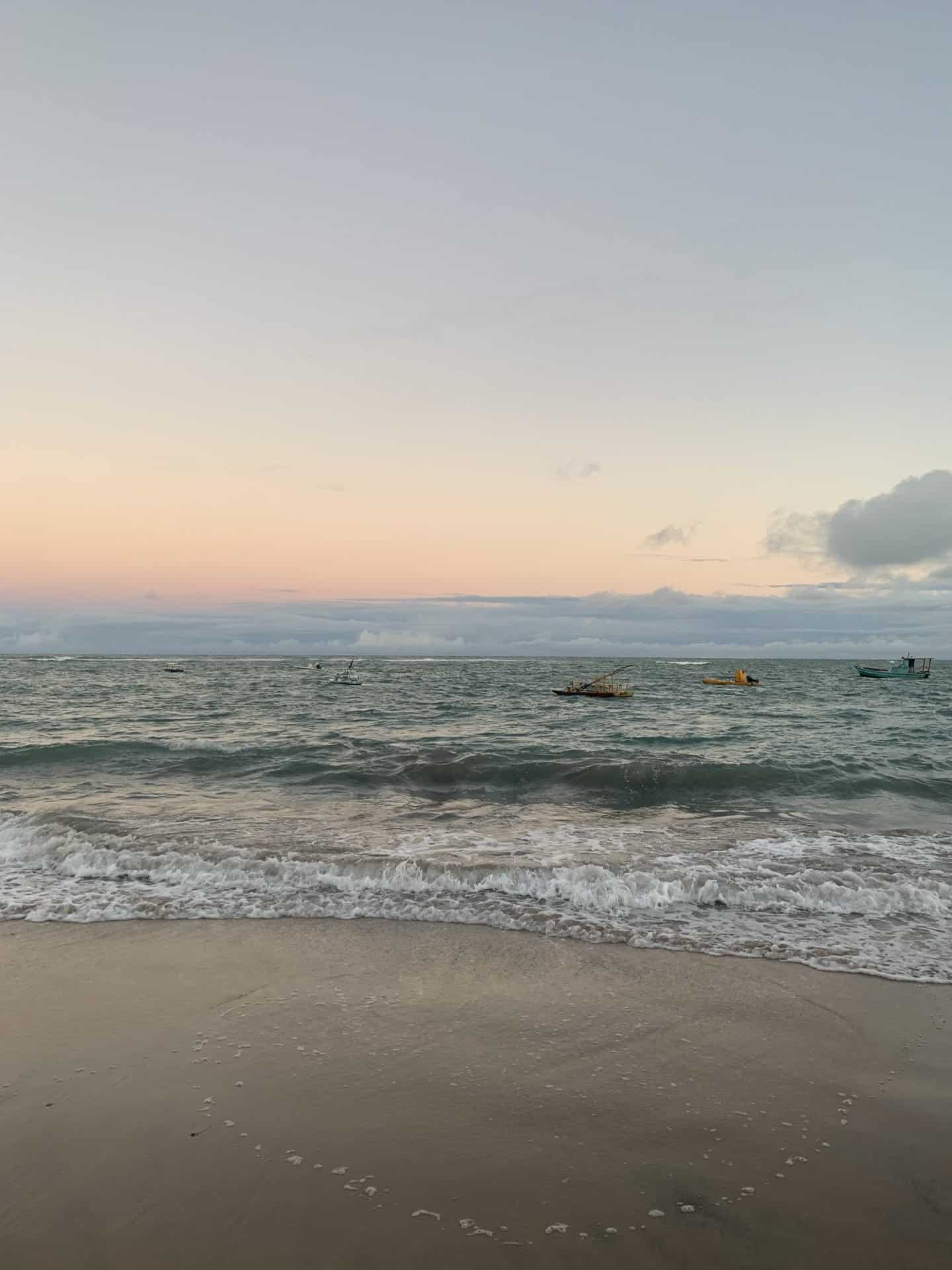
You know how I mentioned the shark-infested Boa Viagem in Recife? Well, in Porto de Galinhas, the beaches are protected by a reef, meaning they’re shark-free and absolutely swimmable.
I share all the details you need for visiting, plus the best things to do in Porto de Galinhas in this guide. But what you need to know right off the bat is that Porto de Galinhas is known for having some of the best beaches in Brazil.
The water is warm and clear, has natural pools, and you can even swim out (or take a boat ride) to a reef that appears at certain times (check the tide time before you go!), so it feels like you’re standing in the middle of the ocean.
I famously never go in the water (a combination of curly hair and poor swimming skills does not bode well for me), but even I had to make an exception for this experience (although it meant literally holding on to my husband for dear life as he swam us out to the reef). In hindsight, I don’t know why we didn’t just take one of the boats, but it definitely made for a more memorable experience that way.
⛵ To take the boat, known as a gangada, you can buy your ticket right at the beach, and it will cost around R$50.
While you could definitely make your time in Porto de Galinhas a day trip, I think spending a couple days would be way better, that way you can relax and check out the different beaches like Maracaípe, which is one of the best known beaches in the region and is a couple miles away from the town’s main beach.

How to get to Porto de Galinhas
We ended up renting a car for our trip, but you could easily take the bus (two different options leave from Terminal Cais de Santa Rita in downtown Recife), or Uber from Recife.
If you’d rather leave all the logistics to someone else, you could also take a tour.
⛵☀️ This full-day Porto de Galinhas tour looks like an awesome option, as it takes you to and from Recife, for a super reasonable price! Reserve your spot here. ☀️⛵
🥥 🌴 If you’re just interested in transportation there, this is a highly-rated option that will take you directly from the airport or your hotel in Recife to Porto de Galinhas. 🌴 🥥


Praia dos Carneiros
This beach is actually an hour away from Porto de Galinhas by car, and about two hours from Recife. We stopped here for a few hours on our drive back from Porto de Galinhas to Recife, and this worked out perfectly for our itinerary.
And it’s seriously a must! So gorgeous, and one of the reasons why I think that Recife is one of the best places to visit in Brazil. Apart from enjoying the stunning beach, Praia dos Carneiros is also well-known for its 18th century beachside church: Capela de São Benedito Igrejinha dos Carneiros.
Located right on the beach, facing the sea, I’ve never seen a church like it. Although it was definitely pretty, it cost R$10 to go inside, and there was a line just to take a photo at the entrance, which I just wasn’t feeling at the moment, but perhaps you have more patience than me!
I’d still recommend walking over and taking a look at it from the outside, regardless!
Getting to Praia dos Carneiros
As far as accessing the beach, I’ve heard some people say that the beach is hard to reach without eating at one of the restaurants or staying at a resort on the beach.
Brazilian law states that all beaches in the country are public. Unfortunately, some businesses/local politicians/wealthy people find workarounds for this, and create physical barriers.
When I went, we entered near Tamandaré Beach.
On Google Maps, you can put in “Piscinas naturais praia de Tamandaré” (natural pools of Tamandaré Beach) as a starting point. From here, we then walked all the way down the shoreline to reach Praia dos Carneiros, which took a while.
It took probably around an hour, but we were going at a slow-ish pace, stopping to take photos and check out the views.
It was a beautiful walk, and walking around was pretty much what we went there to do, but if you’re not up for walking a long way (walking back to our car at the end of the day definitely felt like forever haha), you could always try parking closer in the town and entering from there — I just can’t say if that access will be free or possible.
And of course, if you’re planning to get lunch or dinner here anyway, just going to one of the beach restaurants will eliminate any potential issue. The prices definitely aren’t going to be the lowest, but I still think they were fairly reasonable coming from the U.S., and I had a great meal (with a view).
You could also consider taking a day tour and skip all of this — this 8-hour option handles transportation to and from Recife, and you won’t have to deal with any logistics. ⛵ Book your spot here ☀️


Enjoy Northeastern Brazilian Food
Even though this is last in this list of things to do in Recife, it’s far from least important. If you’re like me, trying local foods is one of the best parts of travel, and Recife does not disappoint.
I’ll be honest, although I like to do my fair share of research before trips, before my first visit to Brazil, I didn’t really know much about its food apart from barbecue.
But (unsurprisingly), Brazil has such great food — and a lot of its best dishes actually come from the Northeast, the region where Recife is.
In short, Brazilian cuisine is a mix of African, European, and Indigenous influences and ingredients, which makes for such a flavorful, one-of-a-kind culinary experience.
Where to eat in Recife
- Parraxaxá — I typically avoid buffets when I’m in the U.S., but I somehow can’t stay away from them in Brazil. What can I say, Brazilians love their buffets, and I definitely appreciate how they’re usually cost-effective and allow you to try a lot! This spot is always highly recommended since they’re all about highlighting regional cuisine, and they have a ton of different things to try.
- Leite — The oldest operating restaurant in Brazil, that’s been open since the 1880s!
- Spettus — if you eat meat, then Brazilian BBQ is a must at some point during your trip. This is a top spot in Recife — and it’s definitely expensive by Brazilian standards, but I think it’s fairly reasonable if you’re coming from the U.S.
- Quintal Cozinha Para Torar — A casual restaurant that serves local dishes.
Foods to try in Recife
- You may already know that Brazil is known for churrasco, a style of barbecuing, and beef cuts like picanha. But the Northeast of Brazil also has its own style of serving beef, called carne de sol, or meat of the sun. It’s thinly sliced meat that’s salted and left outside (in a covered and well-ventilated space) for a couple of days, which cures it, while keeping the inside tender.
- Bolo de rolo — This is a round cake made up of many thin layers that have been rolled together. It traditionally uses guava, which is a popular fruit in Brazil, and is often sprinkled with sugar, but you can also find versions with chocolate or dulce de leche (doce de leite).
- Tapioca — No, not like the pudding. In Brazil, it’s eaten more like a crepe that has a spongier texture, filled with either sweet or savory fillings.
- Caldinho — This is soup that’s typically made with pureed black beans, and other optional toppings like quail eggs or seafood. For some reason, it’s typically served in a glass, and for another reason I can’t say, it’s also commonly enjoyed at the beach, where you can buy it from one of the vendors or kiosks.
- Caipirinhas — This is the national cocktail of Brazil! Made with cachaça, a Brazilian spirit similar to rum, with lime juice, sugar, and sometimes other fruits like passionfruit (my favorite). This cocktail is super refreshing and the ultimate treat during hot days.

Where to Stay in Recife
Since I definitely won’t be recommending where I stayed, I’ve rounded up a couple other great options for you, that are all right in the central part of Recife. (Check out this guide if you’re looking for places to stay in Porto de Galinhas.)
Budget: Beach Class Convention by Mai
This top-rated hotel immediately caught my eye for its 9.2 rating on Expedia with over 1,600 reviews — and reviewers consistently point out its cleanliness, the included buffet breakfast, and its ideal location close to the beach (some rooms even have a sea view!)
Room rates are pretty reasonable, with many falling from $40 to $60 per night on Expedia. Plus, you get features like a pool (with a poolside bar), an onsite restaurant, a fitness room and spa, and a 24-7 front desk, meaning there’s every amenity you’d need for a comfortable stay in Recife.
🏖️ Free breakfast, ocean views, and affordable rates — book your stay at Beach Class Convention by Mai.
Mid-range: Park Hotel
The outdoor pool with an incredible view is what immediately caught my eye with this one! I also love how it has an 8.6 rating on Expedia, with over 1,000 reviews, so you can be confident that Park Hotel has a great track record of providing great service and comfort to guests.
Breakfast is included at the hotel’s restaurants, and there’s also a lobby bar. You’ll be just 328 feet away from the gorgeous Boa Viagem Beach in Recife, with lots of other food spots and sightseeing close by. Past guests especially love the location, saying it’s super convenient for their time in Recife, and they also point out how thoughtful the staff is.
🌅 Want a pool, free breakfast, and to be steps from the beach? Book Park Hotel for beachfront convenience without the luxury price tag.
Luxury: Bugan Recife Boa Viagem Hotel
This beautiful hotel is a great option if you’re looking for convenience, amenities, and some luxury. All rooms have private bathrooms and A/C, with breakfast included. You also have an outdoor pool and a fitness center, with the Boa Viagem Beach just steps away.
It’s rated an impressive 9.4 on Expedia with over 1,000 reviews, so you can feel more than confident booking a stay here. Reviewers especially love the breakfast and the location, but the staff, the pool, and gym, also get frequent mentions in comments. Past guests also point out how the hotel seems even more upscale than its 4 stars suggest, and that its rooms feel luxurious.
And although this is the fanciest option on this list, prices are still more than reasonable, mostly falling under $150 a night. So if you have a bit more room in your budget, I’d definitely go with this one!
✨ Treat yourself without breaking the bank — check current rates for Bugan Recife Hotel.


Find more hotel and short-term rental options in the map below!
Recife Travel Tips and FAQs
Is Recife safe?
Recife has the same big-city risks as other Brazilian cities, mainly petty theft, so keep your phone and camera tucked away, use Uber, and avoid empty streets at night. I stopped by Old Recife on a weekday afternoon and found it quiet. I stayed on guard, but felt comfortable walking around and exploring. For more, see my guide to Brazil safety for solo travelers.
Can you swim at Boa Viagem Beach?
I wouldn’t. You’ll see signs warning about sharks, so Boa Viagem is better for relaxing on the sand. For swimming, head to Porto de Galinhas, where a reef protects the beach.
Should I visit Recife or Salvador?
Salvador has the bigger historic center and a stronger Afro-Brazilian culture scene, while Recife offers Dutch history, quiet beaches, and fewer tourists. If you have time, do both. See my Salvador travel guide and 3-week Brazil itinerary.
How do you get from Recife to Porto de Galinhas?
Take a bus from Terminal Cais de Santa Rita in downtown Recife (two options), an Uber, or a tour. We rented a car. It’s about an hour each way.

How do you get around Recife?
I swear by Uber whenever I’m in Brazil. It’s the safest mode of transportation, and it’s also affordable and easily accessible.
When’s the best time to visit Recife?
Summertime, which is November through February, is generally considered the best time.
The Northeast of Brazil, where Recife is, is blessed with hot weather year-round, with temperatures ranging from the 70s to 80s. The rainiest months, however, are in the wintertime in Brazil, especially July and August.
I visited in July. While the rain didn’t interfere with our beach time or sightseeing at all, in Porto de Galinhas, it did rain overnight, which ended up flooding the entire street right outside our hostel. I had to wear boots made out of plastic bags to get out of the hostel, which wasn’t a big deal, but admittedly wasn’t my best look.
The lowest chance of rain is in December. Just keep in mind that summertime in Brazil is generally more crowded, and prices may be higher.
How long should you spend in Recife?
As you’re building out your Brazil itinerary, I’d recommend giving yourself at least three to five days here — whether that’s as a break between bigger cities like Salvador or Rio, or as a launching point to explore more of Pernambuco state.


Is Recife worth visiting?
Recife might not top most tourist lists for Brazil — but I honestly think that’s what makes it so special.
Between the historic charm of Recife Antigo, the vibrant energy of Olinda, and the warm, reef-protected waters of Porto de Galinhas, this corner of Northeast Brazil completely surprised me in the best way.
You can really feel the culture everywhere — in the music, the food, and even the beach vendors. And for budget travelers especially, it offers so much value and authenticity without the heavy crowds.
I hope this guide helped you feel confident planning your own trip to Recife. If you’re looking for more travel inspiration in Brazil, feel free to browse the rest of my Brazil guides or join my email list by filling out the form below — I share detailed guides, travel inspiration, and honest travel advice that’s especially tailored for fellow budget travelers.
