The Best Five Days in Mexico City Itinerary
Disclosure: Tess the Traveler contains affiliate links and is a member of the Amazon Associates Program, meaning that if you make a purchase using one of these links, I may earn a commission. I only recommend products and companies I trust. See the Privacy Policy for more information. Thanks for your support!
If you’ve stumbled upon my blog before, you probably already know that Mexico City is one of my favorite cities ever.
There’s tons of amazing museums, so much history, beautiful architecture and parks, and obviously, out-of-this-world food.
Basically, I’ve been dying to go back since I left.
Although spending at least a week in Mexico City would be more ideal to leave yourself some time to relax and meander, five days in Mexico City will definitely allow you to experience the main highlights, eat some amazing food, and get some quality sightseeing in. Here’s everything you don’t want to miss to have an unforgettable time in Mexico City.


🌸 My Quick Mexico City Planning Tips 🌮
🎨A cozy, artsy, top-rated hotel in Roma (one of CDMX’s best walkable neighborhoods!)
🌟The bucket list experience you don’t want to miss in Mexico City
🌎My go-to travel insurance for Mexico
📱My favorite eSIM (Use code TESS5 for 5% off! — if you’re from the U.S., check if your regular phone plan works though, you may not need an eSIM!)
🧳 At the top of my packing list: A sweater (it gets chilly at night), comfy walking shoes, and portable charger
Day 1: Centro
Mexico City’s downtown, or Centro, is a must during your five days, and starting your time here is a great way to check out some main sightseeing and start to get a feel for the city.
There’s so much history steeped into this area, the architecture and buildings are amazing, it’s really walkable, and just all around is an amazing way to get a sense of Mexico City’s rich culture.
One of Centro’s highlights is no doubt within its historic center, which is a UNESCO World Heritage Site.
Here you’ll find the Zócalo (more formally known as the Plaza de la Constitución), a public square with tons of historic significance, both for Mexico’s Indigenous roots, and for the city as a whole, and today it regularly serves as a site for fairs, concerts, protests, and more.
There are a couple spots you’ll want to stop at while here, first and foremost, Templo Mayor. This is an Aztec temple that dates back all the way to 1325.
This area, Tenochtitlan, was once the capital of the Aztec empire, and the temple was dedicated to the gods of war, agriculture, and rain.
While a lot of the temple was unfortunately destroyed post-colonization, you can still visit what remains. Apart from walking around the archaeological site, you can also visit an onsite museum. It’s not huge, but I’d plan an hour or so here total.
Admission is 95 pesos or $5.79 USD for both the temple and the museum, and is free on Sundays.
Mexico City Metropolitan Cathedral is also right here. I’ll be honest, I’m not big on visiting churches, but this one is stunning, and it’s also extra special, since it’s actually one of the oldest and largest cathedrals in all of Latin America.
You can also find lots of vendors, street food, and sit-down restaurants right around the Zocálo, along with a pedestrian-only walkway. There are even Danzantes Aztecas dancers here daily, wearing traditional clothing and playing instruments.
Then, just spend some time walking around and exploring.
There’s lots of beautiful buildings throughout Centro (look out for the gorgeous House of Tiles, or Casa de los Azulejos, and the Palacio Postal, an Art Nouveau-style postal office.)
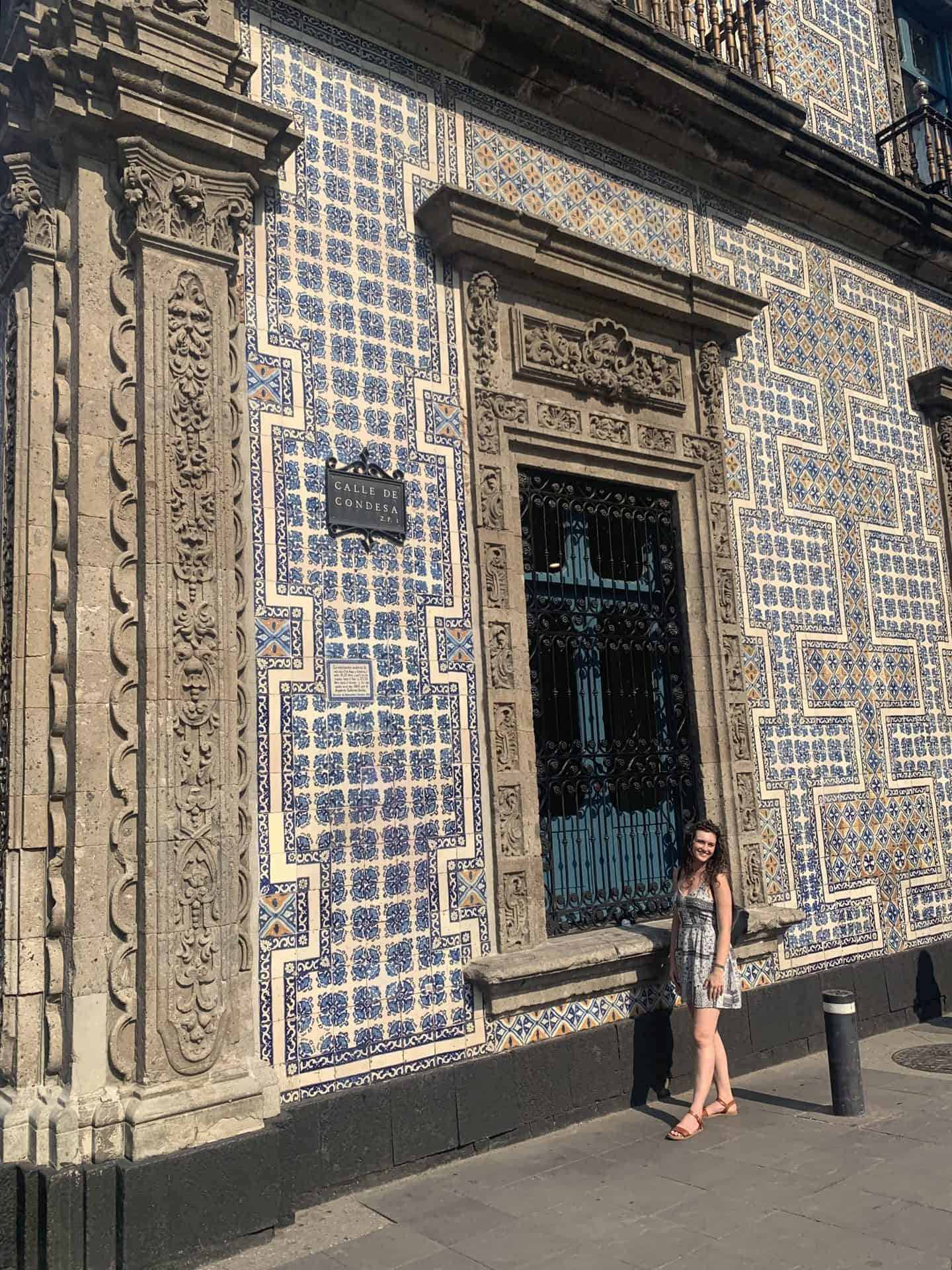

Next we’re going to the Fine Arts Museum/Palacio de Bellas Artes, which is about two miles from the Zocálo, so start wandering in that direction.
Head to the Palacio de Bellas Artes, one of the best museums in the city. It’s a UNESCO-recognized museum and cultural center, and regularly hosts all kinds of performances ranging from ballet folklórico to orchestra shows.
Admission is 75 pesos, or $3.65 USD at the time of writing, and it’s open from Tuesdays through Saturdays. It’s free on Sundays, and like most museums in the city, closed on Mondays.
For sunset, head to Torre Latinoamericana, a 545-foot skyscraper. It’s no longer the city’s tallest building, but it’s still an amazing spot to get a panoramic look at Mexico City from above. It’s not the most cost-effective activity, and isn’t a must, but I do think it’s worth doing once for the awesome view.
Prices can vary, but it typically is 200 pesos, or $9.72 USD to go to the top, where there’s also a little cafe.
Last but not least, walk through Barrio Chino, Mexico City’s Chinatown. It’s a cute area with some shops, an umbrella-lined walkway, and places to eat.

Where to Eat in Centro
Mexico City is such an amazing food destination, with a tooon of choices at different price ranges.
Affordable spots include La Casa de Toño, a popular chain that’s well-priced. It wasn’t anything mindblowing to be honest, but was definitely solid for the price. Tacos Especial de Canasta is near the Zocálo, and Los Cocuyos Taqueria is also budget-friendly.
This isn’t the cheapest spot, but Caracol de Mar is a sustainable seafood restaurant located right next to the cathedral. Within Barrio Chino, there’s Restaurante 4 Mares, another seafood spot, and Hong King.
🥭 Something I HAVE to do the next time I’m in Mexico City is take a food tour. This 5-hour food tour in Centro covers a lot of ground and looks amazing. 🥭
Day 2: Coyoacán
Yesterday was a busy day, so we’ll take it at more of a relaxed pace on our second day here. Mexico City’s Coyoacán neighborhood feels calm, artsy, and is another awesome area for just walking around.
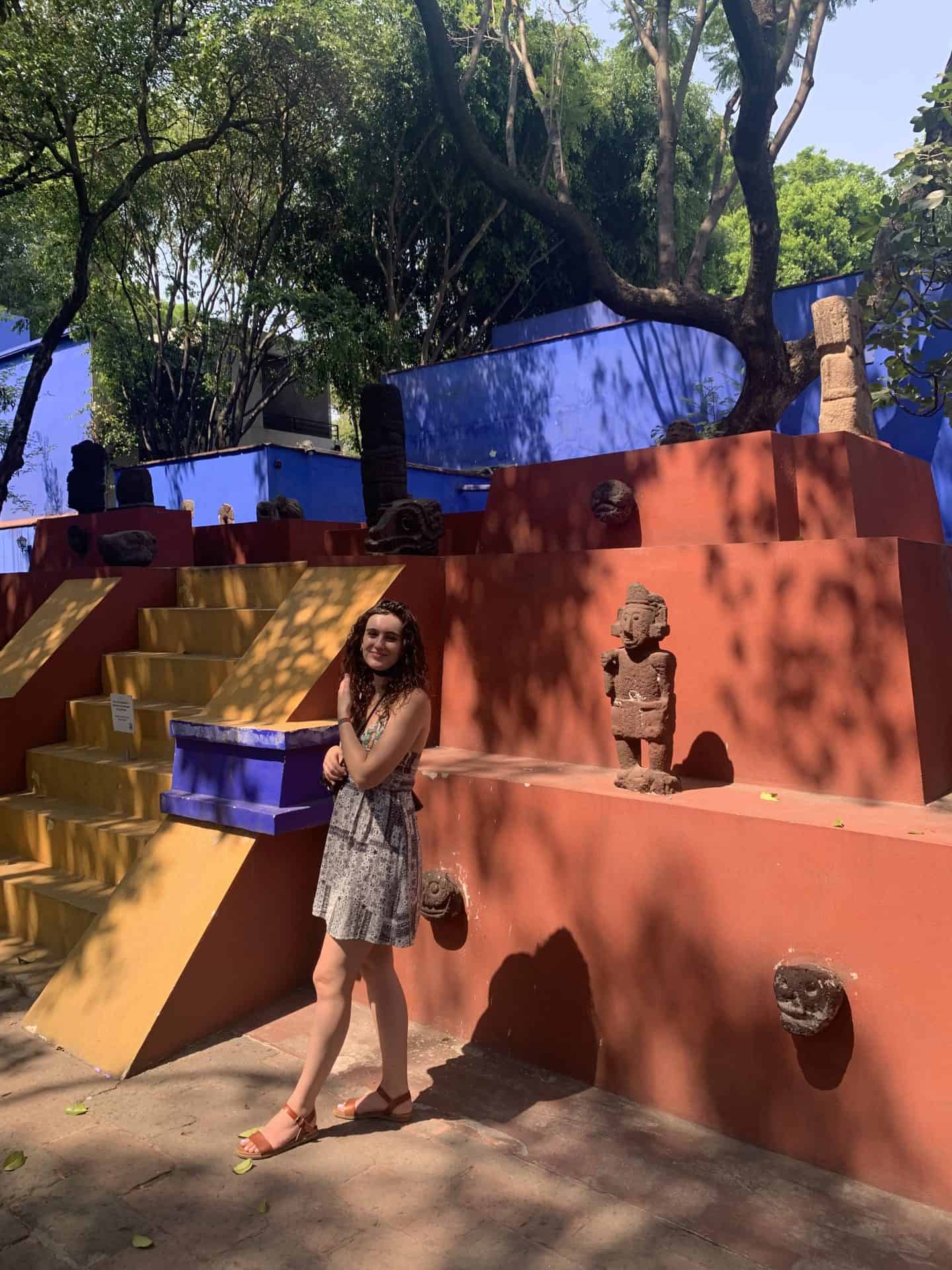
The main event for today is the Frida Kahlo Museum, also known as La Casa Azul. It’s the legendary Mexican artist’s former home that she shared with fellow artist Diego Rivera, and it’s a fascinating look into her life and art.
You can walk around the house and garden, and it’s all around just really interesting and beautiful, and is an absolute must, if you ask me. It’s one of the pricier activities in Mexico City, but if you’re at all interested in Frida Kahlo, it’s worth it.
Admission is $320 Mexican pesos, which is currently $15.55 USD.
Afterwards, check out Mercado de Coyoacán, a great market selling lots of handicraft goods as well as lots of food. Right across the street is a little park, Parque Allende, where on weekends, you can find artists selling their work.
For more shopping, Mercado Artesanal Mexicano, a handicraft market is also a great spot.
If you’re up for more museums, the Museum of Popular Culture is a cool museum I really enjoyed. It’s not huge, so I’d plan to just spend an hour or so here. Admission is $15 Mexican pesos, which is under $1 USD.
I didn’t make it here, but the Leon Trotsky’s House Museum is also in this neighborhood, and is 40 pesos, or $1.96 USD. (There’s also a 15 peso fee if you want to take photos.)
Centro Cultural Elena Garro is also a spot I didn’t get to check out, but looks really cool. It’s a bookstore and cultural center in a 20th century mansion that was expanded with concrete and glass. It makes for a really interesting architectural space that blends together classic and modern styles.
If you’re interested in more churches, Coyoacán is home to another beautiful one, Parroquia San Juan Bautista. It’s another one of the city’s oldest churches, with construction beginning in 1522.


Where to Eat in Coyoacán
Café El Jarocho is a coffee shop that’s a local favorite, and La Pause is an amazing breakfast spot.
As already mentioned, Mercado Coyoacan is also a great spot for food with lots of different options.
Since every neighborhood needs at least one amazing taco spot, Tacos Chupa Cabras is the pick for Coyoacán.
La Guadalupana is also a local cantina that’s been open since the ‘30s, and was allegedly frequented by Frida Kahlo, Diego Rivera, and Leon Trotsky.
Day 3: Teotihuacan Pyramids & Air Balloon Ride
Quick disclosure: I was on a stricter budget when I visited Mexico City, so I did not visit the Teotihuacan Pyramids or do the air balloon ride.
As you can imagine, I am quite filled with regret. If I could do over my itinerary, I would be sure to fit this bucket list-worthy destination in, so I am including it here for you, so you don’t repeat my mistakes!
With that all said, this experience seems unreal.
Just 45 minutes or so outside of Mexico City are the Teotihuacan Pyramids, which was once one of the largest cities in the Americas, with roughly 25,000 residents. The pyramids were built between the 1st and the 7th centuries A.D. and are a UNESCO World Heritage Site.
🌞 This top-rated tour includes optional transportation from Mexico City (you can also choose to add on extra time at the end to explore the pyramids on foot for no extra cost when booking), coffee, breakfast, and a 30 to 50-minute hot air balloon flight.
Just keep in mind that it doesn’t include admission to the archaeological site (85 Mexican pesos, roughly $4.13 USD, in cash). Book it here! 🌞
This is an early morning activity (like, 5 a.m. pick-up time, early), and comes out to around 5 to 9 hours total when all is said and done.
Since you had such an early morning, take it easy for the rest of the day.
I’d suggest just walking around whichever neighborhood you’re staying in and seeing what you stumble upon, whether it’s a gallery, street art, an interesting shop, or otherwise — this is one of the most underrated things to do in Mexico City, tbh, and deserves some dedicated time.
Alternatively, you could head out on another tour (a relaxing one, I promise).
Xochimilco’s Floating Gardens is another top attraction in Mexico City that I sadly skipped (I know, I know).
According to my research, Xochimilco has a relaxed, small-town feel.
At one point, the area was entirely made up of a lake and wetlands, so the Xochimilca people implemented a chinampa system, a Mesoamerican agricultural method. In short, they used floating rafts to create floating gardens, which eventually went on to become human-made islands, which resulted in the canals that remain there today.
The most popular way to experience Xochimilco is on a trajinera, a colorful boat that is truly an experience — there’s often drinks, music, and food.
A lot of tour options combine a Xochimilco trip with a visit to Coyoácan (usually Frida Kahlo’s house), which we already covered yesterday.
⛵ This highly-rated tour option can be booked for later in the day (3 p.m. and 4:30 p.m.) and is 2.5 hours, including a boat tour, a meal, and unlimited drinks. Check it out here! ⛵

Day 4: Chapultepec Park & Museums
I somehow don’t think I’ve mentioned it yet, but Mexico City really has amazing parks. For such a giant city, it still manages to have some beautiful green spaces, from giant parks to small tree-lined plazas offering a little slice of nature in the middle of the street.
Chapultepec Park is definitely the former. It is truly massive, so with that said, we’re going to dedicate most of the day to this area.
Let me say again how giant it is, and easy it is to get lost here. I’d suggest saving a map to your phone ahead of time, and while there are definitely tons of routes you could take, and lots more to check out then I’ll list, this is the path I’d suggest:
Start off at the National Museum of History, which is located in a castle. Admission is 95 pesos to enter, or $4.62 USD.
Walk past the lake where the Casa del Lago Juan José Arreola cultural center is, then make it to the National Museum of Anthropology (Museo Nacional de Antropología). This museum is giant, and I definitely didn’t get to see all of it while I was there. As much as I love museums, I tend to max out at about three hours or so, and I think I only made it through one of the museums’s floors during this time.
But if you’re at all interested in Mexico’s precolonial history and its Indigenous communities, then you’ll love this museum.
After you’re over museums for the day, for the late afternoon/evening, head to the Polanco neighborhood, which is bordering the side of the park where the anthropology museum is.
This neighborhood is known for its upscale shopping, museums, and lots of restaurants.


Where to Eat in Polanco
There’s a ton of fine dining here (Pujol and Quintonil are the most acclaimed, if that speaks to you) and it overall isn’t the most budget-friendly neighborhood (far from it, in fact. Some people compare it to Beverly Hills in Los Angeles.)
But, I managed to hunt down a few affordable spots, which include El Turix, which is one of the city’s most well-known taquerias (beloved especially for its cochinita pibil tacos, made with a slow-roasted pork), Tortas Las Margaritas, a counter-service deli, and Delmar Sinaloense, a super tiny spot known for their spicy Sinaloa-style aguachile de camaron. Quesadillas Maria Isabella has been around since the ‘60s and is another top spot for affordable food.
Day 5: Roma Norte & Condesa
Our fifth and final day in Mexico City brings us to Roma and Condesa, two neighborhoods that border each other and all in all are artsy, charming, and walkable.
There aren’t a ton of specific recommendations for these areas, as a lot of its appeal is simply just wandering around and exploring. There are lots of cafes, art galleries, street art, shops, restaurants, and more, with lots of beautiful architecture and green spaces along the way.
Stop at Parque México and Parque España in Condesa, two relaxing park spaces great for walking through, or just resting and people-watching. Also in Condesa, walk along Avenida Amsterdam to see its beautiful buildings. In Roma Norte, check out the Museo del Objeto del Objeto and MAIA Contemporary if you’re in the mood for museums.
Where to Eat in Rome Norte & Condesa
Brujas is a women-led cocktail bar based on Mexican herbal medicine practices — and it’s considered one of the continent’s best bars.
Atlante is a pizza-by-the-slice spot serving a Mexican spin on New York style.
Taquería Orinoco in Condesa is a budget-friendly taco spot open late with amazing al pastor and chicharron tacos.
Café El Asturiano in Roma Norte has a $7 daily menu which includes an agua del día, a soup, an appetizer, a main course, and dessert.

Where to stay in Mexico City
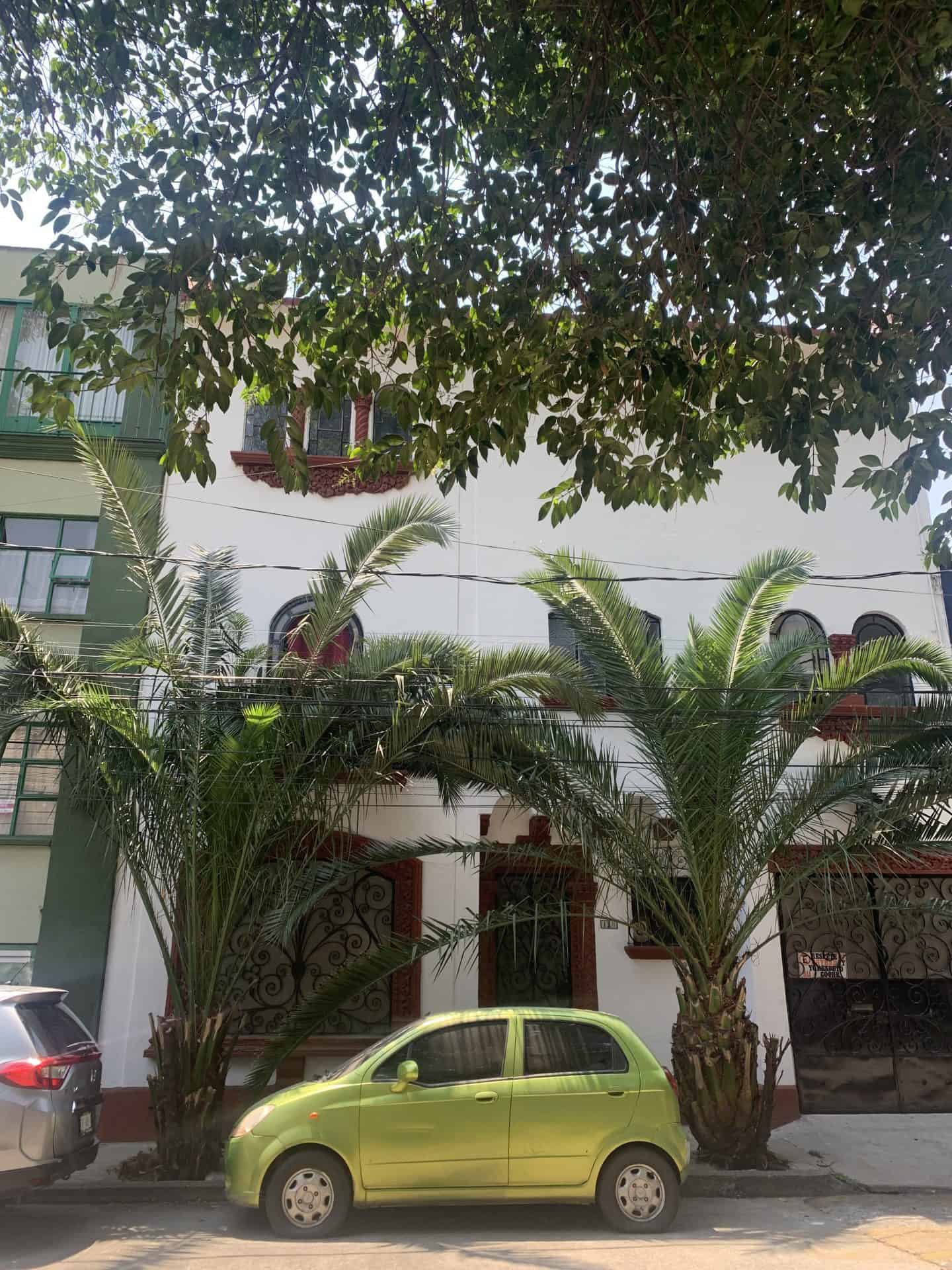
For your first time in Mexico City, staying in Centro, Roma Norte or Condesa are all great choices. They’re all walkable areas, with lots of food and sightseeing options nearby, and they’re considered pretty safe.
→ What I recommend: I only suggest places that are well-rated (yes, I read through reviews!), have a decent number of ratings, and are all-in-all a place I would consider booking myself. Since my only experience is with budget travel, all my hotel and hostel recs are under $150 a night.
$ HOSTEL MUNDO JOVEN CATEDRAL – This hostel in Centro has private rooms and shared dorms available (both options are under $50 per night). It even includes breakfast, has an onsite restaurant, has a terrace, and 24-hour security/reception. Find out more here.
$ HOSTAL FUNGI CASA ROSA – This artsy Condesa hostel has a living room, two kitchens, roof garden with a barbecue, plus a co-working space. Breakfast is also included, and there’s 24-hour reception. There are also private rooms and shared dorms available. Book here.
$$ KALI CENTRO – In the Historic Center, this spot has a 24-hour front desk, a restaurant, and a bar. You’ll also have a private bathroom, and breakfast included, which really makes for an amazing deal at this price point. Book here.
$$ CONDESA CIBEL – This cute spot is highly-rated, has a 24-hour front desk, a rooftop, and private bathrooms for every room. Learn more here.
$$$ HOTEL PRINCIPAL – This beautiful hotel in Centro has an amazing location, its own onsite bar and restaurant, and breakfast included or available for just $9 depending on which room you select, There are also elevators and a 24-hour front desk. Book it here.
$$$ NANA VIDA CDMX – This four-star hotel in Roma Norte is super beautiful and highly-rated across the board.There’s also a 24-hour front desk and terrace. Find out more.
This guide has more of a neighborhood breakdown, with recommendations in each of the main neighborhoods at a range of prices.
Mexico City is really such an amazing place, and you’ll definitely leave these five days wanting to come back!
Looking to extend your trip to other destinations in Mexico? Follow my three-week itinerary I used when I visited Mexico. It includes Oaxaca City, Puerto Escondido, Puebla and Cholula along with Mexico City, and was the most amazing trip!


Final tips for visiting Mexico City
→ If flying, Mexico City International Airport (or Benito Juárez International Airport a.k.a. MEX) is where you’ll fly into. Despite what some people say, you can take an Uber from the airport!
→ In general, Ubering is a great way to get around. They’re affordable and easily accessible. Just keep in mind that traffic can be crazy, so definitely time for this!
→ Public transportation is also accessible here. You’ll need to get yourself a Metro card if you’re interested in going this route!
→ The weather is usually pretty temperate, with just two seasons, rainy and dry. This packing guide has more info with recommendations for what to bring.
→ In general, I felt very safe in Mexico City. Just be aware of your surroundings and follow basic safety precautions!
→ Mexico City is 7,200 feet above sea level, so it’s possible you may feel a little off as you adjust to the altitude.
→ Have cash with you! Lots of places will take cards, but plenty of street vendors won’t.
→ Most museums are closed on Mondays.
Head to one of these guides next
- Visiting Mexico City for the First Time? Here’s Everything You Need to Know
- Where to Stay in Mexico City: Budget Hotel and Neighborhood Guide
- What to Pack for Mexico City
- The Best Five Days in Mexico City Itinerary
- The Perfect 3 Weeks in Mexico Itinerary
- What to Eat in Mexico: 25 Top Foods and Drinks
- Oaxaca City Travel Guide: What to Do, Eat, and Where to Stay
- The Ultimate Puerto Escondido Travel Guide
