The Ultimate Rio de Janeiro Travel Guide
Disclosure: Tess the Traveler contains affiliate links and is a member of the Amazon Associates Program, meaning that if you make a purchase using one of these links, I may earn a commission. I only recommend products and companies I trust and have used. See the Privacy Policy for more information. Thanks for your support!
I’ve visited Rio de Janeiro a number of times over the past several years, am married to a local, and in short, it’s one of my favorite places ever. It’s the type of place you can visit again and again and always find something new to experience — another historic samba bar, another gorgeous hidden beach, another restaurant serving the best moqueca you’ve ever had.
But I also know that it can sometimes be a daunting place to visit, and I was basically clueless during my first visit, which was a solo trip back in January 2020. This Rio de Janeiro travel guide will answer all the questions you may have — from what to do, what costs to expect, where to stay, and other travel logistics, so you can skip the worrying, and just focus on enjoying all that Rio has to offer.

Brazil visa requirements
As of April 2025, U.S. citizens will need a tourist visa to enter Brazil. It costs $81 and qualifies you for a stay up to 90 days. It will also be good for 10 years!
Applying wasn’t too annoying of a process for me, but I did need to get a new photo taken and resubmit because my ears weren’t showing in my original photo! So just be sure to read the directions carefully before you apply. I share all the details you need to apply and mistakes to avoid in this tourist visa guide.
🇧🇷 My Quick Rio de Janeiro Planning Tips 🌺
🌎 My go-to travel insurance for Brazil
📱 My favorite eSIM (I had service even at Rio’s most remote beaches — use code TESS5 for 5% off!)
✈️ How I find the best flight deals to Rio
🌴 My favorite hotel in Rio (with beach views!)
🧳 At the top of my packing list: A secure bag, a phone wrist strap, and a portable charger
🌞 Short on time? Book this tour of Rio’s top sites.
🗺️ Want all my curated recommendations from years of visiting Rio all in one place? Save my Google map (it’s free!).
How to get to to Rio de Janeiro
BY AIR – Rio’s international airport is Rio de Janeiro/Galeão–Antonio Carlos Jobim International Airport (GIG). But if you first fly into São Paulo, or you’re coming from somewhere else in Brazil, you may also fly into Santos Dumont Airport (SDU). Once you leave the airport, you’ll see a ton of people trying to offer you a taxi/shuttle/etc. — Price and safety-wise, it’s best to grab an Uber. At GIG, you’ll just have to take the elevator up to the Uber pickup area, but you’ll see clear signs.
BY LAND – If taking a bus into Rio, Rio’s main bus station is the Rodoviara Rio Novo, which is close to Centro (Downtown) Rio.
Currency in Brazil
The real, or reais (plural). At the time of writing, 1 US dollar is 5.21 Brazilian real, but it fluctuates all the time.
Most places will accept cards in Rio, but it’s a good idea to have a little bit of cash on hand as well, especially for beach vendors, tipping tour guides, etc. As for getting money out of ATMS, the safest bet is to do it inside of a bank (Santander, Bradesco or a Banco do Brasil).

Rio de Janeiro’s a huge city — but it doesn’t have to be overwhelming.
I’ve been to Rio multiple times, and now I’m sharing my curated picks with you. Fill out your info below and your free map will be sent straight to your inbox, complete with all my favorite restaurants, bars, beaches, and more, based on years of traveling to Rio.
Language in Brazil
Portuguese. English speakers aren’t too common in Rio, but using Google Translate will get you far!
There are options to type or even talk directly into your phone and it will translate. You can also use your phone camera to translate menus or other signs. I’ve found that this function doesn’t work perfectly, but it definitely helps.
If you won’t have phone data in Brazil, you can download the language dictionary ahead of time and be good to go with or without WiFi access. (I do recommend getting data though. I like Saily — you can grab the same plan here. Usecode TESS5 for 5% off.)
If you speak Spanish but not Portuguese, this will also help you tremendously. A lot of the words are the same, so once you get used to the accent, you should at least be able to understand the gist of what’s going on. I can get by in Spanish but I’m not fluent, and this has helped me a ton when traveling in Brazil.
I just would avoid going up to someone and just speaking Spanish — I personally ask if they speak English or Spanish first, and if both are a no, I try to get by with my minimal Portuguese, using my Spanish skills to help me. Sentence structures are similar, while many individual words are either the same or quite similar.
Getting around Rio de Janeiro
Ubers are always easy to access, and they’re extremely affordable, especially compared to the U.S.
The subway is also very accessible and generally safe, but especially at night, traveling by car is preferable, safety-wise.
Everything you need to know about getting around Rio de Janeiro is in this guide, from how to use public transportation and what I always avoid.



Weather in Rio de Janeiro and best time to visit
Over the summer, from November to February, expect high heat and humidity, often ranging from the 80s to 90s. This is also the rainiest time typically, but I’ve visited during the summer multiple times, and rain has never interfered too much with my time here.
To be totally honest, the crowds have never really bothered me, but this by far the most crowded time. When you get into January, pre-Carnival festivities begin (it typically happens in February or March), and hotel prices get more expensive.
If you’re visiting during the winter, or May to September, expect temperatures in the 70s, but pack some pants and sweaters in case.
Rio has a sub-tropical climate, so prepare for rain throughout the year, but winter is typically the driest time.
More details for each time of year — including weather, what to pack depending on when you’re visiting, crowds, affordability, and other events to be aware of — are all in this Rio seasonal guide.


Where’s the best place to stay in Rio de Janeiro?
There are so many great areas to stay in in Rio, but here are some of my top choices.
My first time in Rio, I stayed in Lapa, since it seemed centrally located to a lot of attractions I was interested in.
It was right around the corner from the famous mosaic staircase Escadaria Selarón, and the charming and artsy Santa Teresa neighborhood. Lapa is also a great place for nightlife, with an abundance of affordable restaurants and bars.
However, it gets quite loud and crowded at night, and it’s also a generally less safe area of the city.
The most popular places to stay are Copacabana or Ipanema, home to Rio’s world-famous beaches along the city’s South Zone. I’ve stayed in both neighborhoods, and loved the proximity to many restaurants, shopping, and of course, the ocean.
If I had to choose a neighborhood, I’d pick Ipanema, as I found it to feel a bit safer, calmer, and the most beautiful. If you have a higher budget, you could even stay in Leblon, which is the next neighborhood down, and is known as the fanciest (and safest) area in Rio.
However, it’s easy to walk between Copacabana, Ipanema, and Leblon, so ultimately I don’t think it makes a huge difference in your overall experience either way.



Is Rio de Janeiro safe?
If you’re planning on visiting Rio, chances are, you’ve come across at least some safety warnings, either online or from other people.
So, is it true? The answer is, well . . . it’s complicated. (Click that link to get all my honest thoughts on safety, and my top tips.)
I wouldn’t call it the most beginner-friendly travel destination, and you of course know your own risk tolerance the best.
In general, I don’t think tourists have to worry about any sort of violent crime. The biggest concern for tourists is being pick-pocketed or mugged (which does still suck, I know). While you sadly can’t completely eliminate any chance of this happening, there are lots of precautions you can take to greatly reduce you risk.
First and foremost, don’t wear any gold jewelry. Don’t walk around with your phone in your hand. And don’t carry all your cash at once (honestly, good advice to follow regardless of where you’re traveling, though).
If anything does happen, please just give up your phone, wallet, or whatever you’re being asked for. Objects are replaceable. I promise that it’s not worth the fight!



How long to spend in Rio de Janeiro
While you could seriously spend weeks here without getting bored, I’d recommend spending a week at minimum to really get a grasp of the city and see the highlights. I wouldn’t stay less than four or five days or so, or you’ll have to start making some serious sacrifices about what you want to see.
Best Things to Do in Rio de Janeiro
While Rio is sooo much more than just its beaches (although you’ll definitely get some beach recommendations here, not to worry), Rio truly has it all — from a bustling city life, to absolutely gorgeous tropical forests, and fascinating museums and history. Here are just a few of my favorites places, after years of visiting Rio.
Jardim Botânico
Just north of Ipanema is 340 acres of paradise.
Truly one of the most beautiful slices of nature in Rio (which is saying a lot in a city full of nature), it’s more than worth spending a peaceful morning or afternoon strolling through the over 6,000 types of plants, trees and flowers. If you’ve seen that photo of Rio with the rows of palm trees before, it’s here.
I’ve been here a couple of times and definitely hope to return on my next visit, that’s how much I love it!
The entrance fee is currently 67 reais (almost 13 US dollars). Sadly they didn’t accept my U.S. student ID for a discount, but check out up-to-date information on the garden’s website.


Tijuca Rainforest
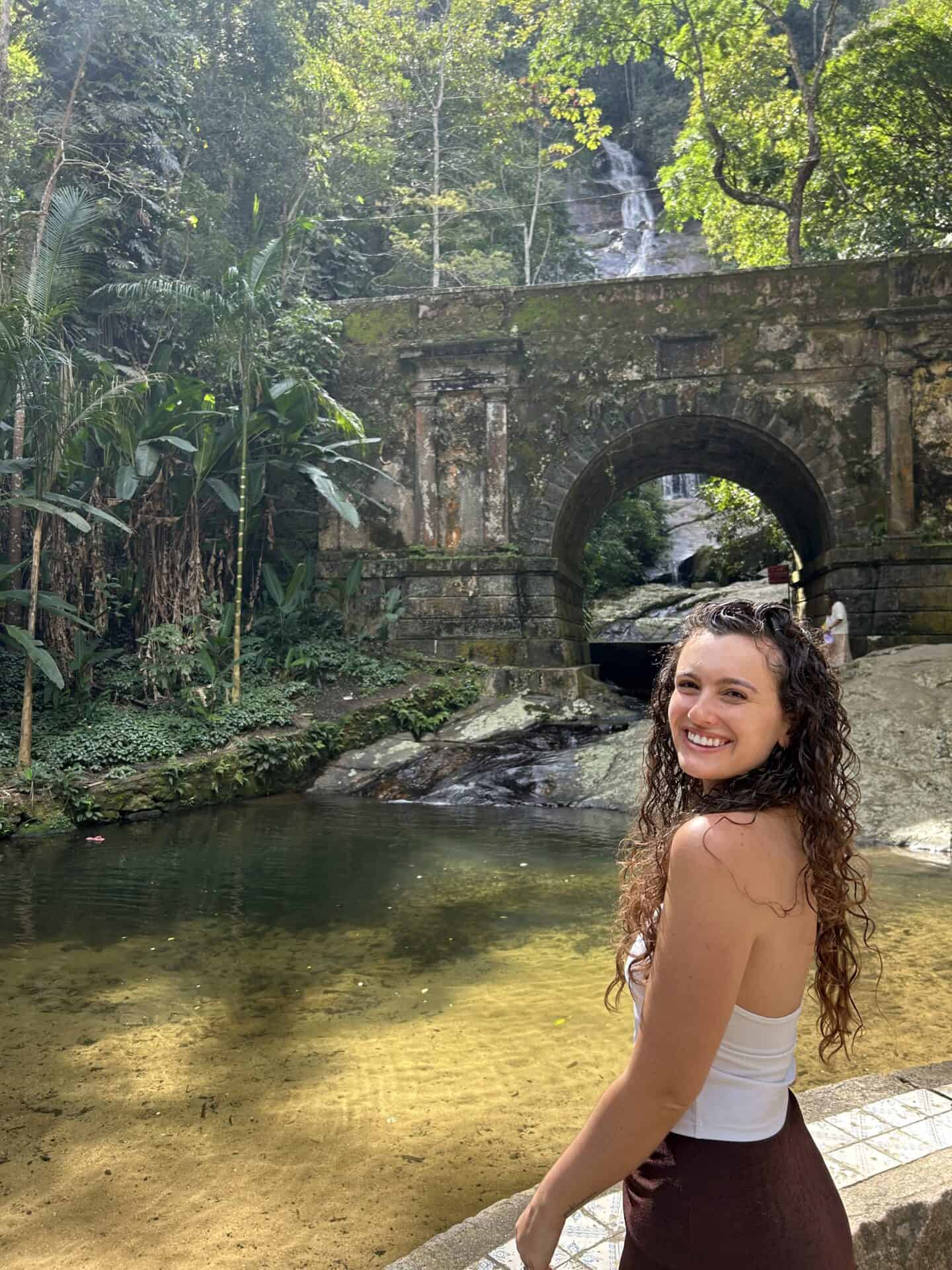
With dozens of possible hikes, you can spend days exploring its many waterfalls, monuments, and lush biodiversity.
To be honest, I’m not the most adventurous hiker, but there are lots of beginner-friendly paths to take.
I absolutely loved the Pedra Bonita trail. It’s considered a relatively easy hike, but the views are unreal. I’m all about the minimum effort, maximum reward when it comes to hiking.
The forest is also free to visit!
Copacabana and Ipanema
Although Rio has so much more to offer than its beaches, no Rio de Janeiro travel guide would be complete without mentioning the beach at least once.
While there’s an abundance of beaches to explore, Copacabana and Ipanema are definitely the most iconic, offering a picturesque view of two mountains, called Dois Irmãos (two brothers), tucked behind gorgeous water.
These beautiful beaches are right next to each other and are two of the most well-known places in Rio.
The views are amazing, and there are plenty of kiosks along the shore where you can sit and get food or a coconut water, and you’ll often see vendors selling other snacks like skewers of barbecued cheese along the beach.
Just keep in mind that you shouldn’t leave your things unattended, and to make sure someone is keeping a close eye on your things if you go in the water.
Since these beaches are so popular they can also tend to get crowded, especially Copacabana.

Take a walking tour
I personally love free walking tours. They’re an amazing way to cover a lot of ground and get an introduction to a new city. Guided by a local, you’ll learn about a city’s culture and history. They also can be a great way to meet other travelers, if you’re traveling solo!
Plus, you’ll get some ideas of places to return to or visit later. Just remember to tip your guide at the end!
Free Walking Tour Rio de Janeiro has some great options. I went on the Downtown and Lapa tour, the Olympic Boulevard and African Heritage tour, as well as the Lapa Pub Crawl, where I ended up meeting my now-husband. (I told you I really love walking tours.)


Mureta da Urca
Another spot to get a taste of that Carioca lifestyle is in Urca, a picturesque neighborhood that overlooks Guanabara Bay.
The mureta, or “little wall,” is a popular spot for locals to hang out while taking in Rio’s stunning views.
Grab a drink at a nearby boteco (or “root bar,” a casual local’s bar found throughout Rio) and enjoy the sunset!
Listen to samba
Every Monday night, you can join a crowd at Pedra do Sal for live music.
A historic and religious site (learn more about it on the African Heritage tour!), Pedra do Sal is considered the birthplace of samba, an iconic music style that originated in Afro-Brazilian communities in Rio de Janeiro, and Bahia, another state in the northeast of Brazil.
Even if you’re not able to go on a Monday, listening to samba is a non-negotiable in Rio. It’s such a huge part of the culture here, so make sure to listen to it at some point.
Sunset at Arpoador

Right between Ipanema and Copacabana, is a little stretch of rock called Arpoador.
Every evening, you can find crowds of locals gathering to watch the sunset. While it’s worth stopping by any time of day, watching the sunset from here feels especially magical.
Sugarloaf Mountain
This is one of the top tourist destinations in Rio, and for good reason.
For incredible panoramic views of the city, you won’t want to miss this one. I’d especially recommend visiting around sunset, which is when I visited, although it can get crowded at this time.
To take a cable car up the mountain, you must buy a ticket either in advance or at the ticket office, which opens at 8 a.m. Cable cars leave every 20 minutes and cost about $33 USD. You can also hike up if you want, but be sure to buy your ticket before embarking.


Museum of Tomorrow
The Museum of Tomorrow, or Museu do Amanhã, located in Centro, or Downtown, is an innovative science museum with several exhibitions about the cosmos, the Earth, and of course, the future, all with a sustainability lens.
A lot of information was in English, and although I’m not typically a big science museum fan, I really enjoyed myself here. The building itself is also really cool, if you’re into architecture.
With a student ID or if you’re under 21, admission costs 15 reais, which is 2.89 US dollars. A full-price ticket is $30 reais, or 5.79 US dollars.
Parque Lage


One of my favorite spots of this entire Rio de Janeiro travel guide is Parque Lage. Situated next to Jardim Botânico, this is a beautiful park with a romantic European ambiance.
While the park is free, it’s worth grabbing a drink or snack to enjoy the iconic architecture and pool. To explore the upper floor of the building, you can either pay an admission fee or buy something from the gift shop.
Barra da Tijuca

For a beach area that’s little more off the beaten path but beloved by locals, head to Barra da Tijuca, which could be anywhere from 30 minutes to an hour away from the South Zone area, depending on traffic.
Not only is this area less crowded and generally safer than the South Zone beaches like Copacabana, but it’s super pretty.
If you keep going further west, you’ll stumble upon even more gorgeous hidden beaches, that are even more unreal. Prainha Beach is my personal favorite — I don’t think I’ve ever seen a beach quite as beautiful.
Royal Portuguese Reading Room
Located in Centro, the Royal Portuguese Reading Room is an absolute gem that sadly took me several visits to Rio to actually make it to.
Not only is it free to visit (!) but it is breathtaking — it first opened in the 1880s, as a way to promote Portuguese culture to those living in Brazil. It is now the home to over 350,000 literary works, making it the largest collection of Portuguese books outside of Portugal.


Christ the Redeemer
The Christ the Redeemer is another spot that tops every “what to do in Rio” list. But to be honest, it never had a huge appeal for me. Controversial, but, I don’t really know why it’s a world wonder.
Be warned that this place gets super crowded, and it will be a struggle to get a photo with the famed Christ statue.
The real appeal for me, and why I still think it’s worth it, is the incredible view. You get an amazing look of the ocean, the mountains, and the city below, and it’s really magical.
If you don’t go as part of an organized tour, or buy your tickets ahead, it’s cash only at the entrance, and costs about $11.30 USD, or R$55.50.
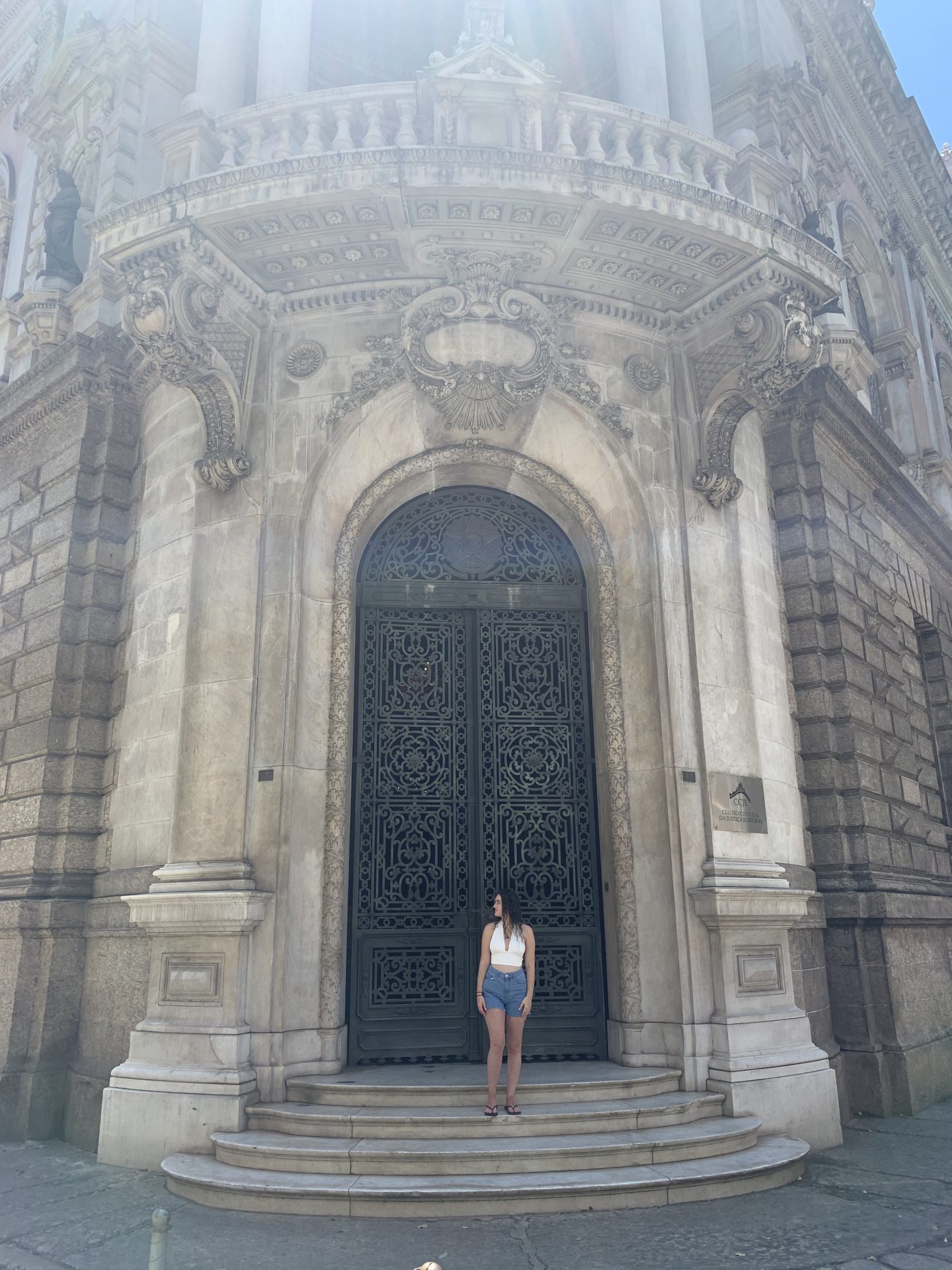
Centro Cultural Banco do Brasil
I just had to sneak one more museum onto this list. I’ve visited the Centro Cultural Banco do Brasil two or three times, and I’ve always enjoyed my time.
In fact, I think it’s one of the best museums in Rio! Located in Downtown, a.k.a. Centro, it’s free to visit, and always has unique exhibits that will show you a different glimpse into Brazilian culture and history. It’s also another really beautiful building!


Other Cities to Visit from Rio
More details are in this guide, but here’s a quick overview, if you’re looking to explore more of the region.
Easy day trips:
- Neighboring Rio de Janeiro is Niterói, a mid-sized city that’s super underrated (in my humble opinion). There’s a great art museum here, some hiking options, beautiful beaches, and lots of delicious restaurants, just to name some of its highlights.
- If you’re looking for a break from big city life, and just relaxing by a calm and quiet beach sounds great to you, then you’d love Ilha de Paquetá. It’s a super tiny island in the Guanabara Bay that doesn’t even have cars! To get here, you just take an hour ferry ride that costs less than $2 USD.
Weekend trips:
- If you’re looking for secluded beaches and hiking, Ilha Grande, a tropical island around 3-4 hours from Rio, is a dream, known for some of the best beaches in the world.
- For charming historic architecture, gorgeous waterfalls, cachaça, and gorgeous waterfalls and beches, you can’t do better than Paraty! It’s also around 4 hours from Rio.
- The Lakes Region is a couple of hours away from Rio, and is also amazing for beaches, with areas like Buzios and Cabo Frio.

Costs of traveling in Rio de Janeiro
These are rough estimates based both on my experience and research of other traveler’s experience, but and are subject to change.
- Dorm bed in a hostel: $14 to $40 a night
- A private room in a basic hotel: $25 to $50 a night
- A luxury hotel: $50 to $110+ a night
- A beer: $0.80 to $2
- A coffee: $1 to $2.50
- An açai bowl: $2.50 to $6.65
- A typical meal: $3 to $15
- An average Uber ride: $3 to $10
What to eat and drink in Rio
Rio is so full of delicious food! I share more food and drink options in this guide, but what you need to know right off the bat is that the typical Brazilian meal generally includes meat, rice, and black beans topped with farofa, a cassava flour mixture toasted with seasonings and sometimes bacon.
Many meals also come with a small portion of vinagrete, which is a Brazilian-style tomato salad similar to pico de gallo.
For breakfast, you’ll find that many Brazilians tend to keep it on the lighter side compared to the United States. Bread or pound cake is commonly served with coffee. Some people add cheese, ham, or scrambled eggs.



While in Rio, enjoy an abundance of fried snacks, such as pastels (similar to empanadas) or coxinhas, which is essentially a chicken croquette.
Two of my favorite dishes that I always eat when I visit are moqueca, a rich fish stew made with dendê oil, or palm oil, and feijoada, a bean and meat stew.
Of course, Brazil is known for its barbecue, so trying some barbecued meat is also a must for anyone who eats meat.
You can either go to an iconic all-you-can-eat steakhouse (known as a rodízio), you can just order steak from pretty much any place serving food. A lot of places will also offer a plate of mixed meats, so you try a few different things for cheaper.

What to pack for Rio de Janeiro
You’ll definitely want to check out this Rio de Janeiro packing guide that has 12 essential items that you won’t want to forget. But here are a couple highlights:
- An umbrella or other rain gear
- If you plan to bring a camera, a discreet camera bag that looks like a normal bag (not a camera bag), and that securely closes.
- Flip-flops. Of course they’ll come in handy at the beach, but you’ll see that locals wear them all the time.
I hope that this Rio de Janeiro travel guide has answered all your questions about visiting. It really is such a special city, and one of the best places to experience Brazilian culture. I hope that you have an amazing time!
Want to get all my favorite spots saved in one easy-to-use resource? Drop your name and email below to get my curated Google Map, filled with all my recommendations based off of years of traveling to Rio.
Head to one of these Rio guides next
- Best Time to Visit Rio de Janeiro (Seasonal Guide)
- How to Get Around Rio de Janeiro Like a Local
- Where to Stay in Rio de Janeiro on a Budget
- Windsor Leme Hotel Review: Perfect for First-Time Rio Visitors
- One Week in Rio de Janeiro Itinerary
- 6 Best Museums to Visit in Rio de Janeiro
- Best Weekend and Day Trips from Rio de Janeiro
- Best Rio de Janeiro Restaurants: Botecos, Samba & More
- 15 Brazilian Foods and Drinks You Have to Try in Rio de Janeiro
- How to Pack for Rio de Janeiro, Brazil
- How to Get to Sugarloaf Mountain, Rio de Janeiro
- The Ultimate Rio de Janeiro Travel Guide
- Is Rio de Janeiro Safe? My Honest Thoughts After 6 Visits
- Is Brazil Expensive to Visit? A Budget Breakdown
- 5 Best Places to Visit in Brazil for Your First Trip

I read your post and was sad that we missed much of this when we had 2 days in Rio. The weather crapped out and we really did not explore all we hoped to see. With the sun shining, your photos remind me how beautiful this city is. I love the mix of outdoor sights and buildings to see. And of course, that view of the city from the Redeemer statue would be amazing! Next time for sure we will see so much more.
ah yeah I’m sorry to hear you were so unlucky with the weather!! I hope you get to visit again and that you have a better time!!
Amazing post! I sure hope I can visit Brasil one day!
thanks so much!! I hope you can too 🙂
I really enjoy the diversity of activities included in this guide. The blend of museums, beaches, and mountains would make for an excellent trip.
aw thanks, Sonia! that’s my favorite kind of trip!
This guide is really useful. I wish I had it when I was in Rio for a day several years back. I would have added some of these locations to my itinerary.
thanks for reading, Rhonda! I hope you still had a great time!
I have had Brazil on my radar for a long time, and always chickened out to travel somewhere more “familiar” (Asia) . Thank you for this really helpful guide, I am saving it and one day, I will use it!
I totally get that! I always end up going back to Latin America instead of going to a different region😂 but thanks so much for reading, Anja! I’m so glad you found it helpful 🙂
I’ve wanted to visit Rio for the longest time and now I’m more familiar with it thanks to your guide! I’ve always loved the combo of mountains and beaches, and your post proves me right that Rio does have it all!
I’m so glad to hear that!! I definitely think so 🙂